ABO blood type matching
Blood types
Testing and matching are important before someone gets a blood transfusion. If you get a transfusion with a blood type that doesn’t work with yours, your immune system might attack the donated blood. This can cause a serious or even life-threatening transfusion reaction. See Possible risks of blood transfusion for more information on side effects.
Donated blood is always tested to find out what type it is. This is done when it’s taken from the donor and again in the hospital lab. If you need a blood transfusion, a blood sample is taken from you and tested the same way.
All blood has the same parts, but not all blood is the same type. People have different blood types based on antigens. Antigens are substances that trigger the body’s immune response. When typing someone’s blood , two antigens are looked at:
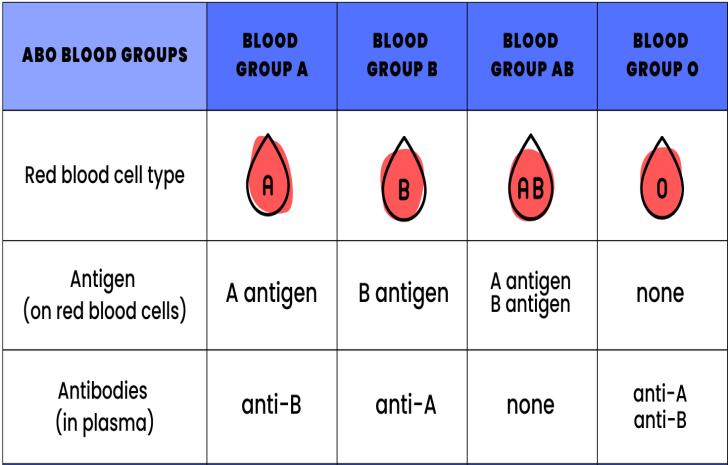
- ABO antigen type. Everyone has either type A, B, AB, or O blood. This means that their blood cells have either antigen A (type A), antigen B (type B), both antigens (type AB), or neither antigen (type O).
- Rh factor. Everyone is either Rh-positive or Rh-negative (you either have Rh or you don’t).
Your ABO antigen + Rh factor = blood type. There are eight different blood types:
- A positive and A negative
- B positive and B negative
- AB positive and AB negative
- O positive and O negative
ABO blood type matching
The A and B antigens decide a person’s ABO blood type (either A, B, AB, or O). In the United States, the most common blood type is O, followed by type A.
Whatever antigen you have on your blood cell is linked with the antibodies in your plasma. Antibodies are proteins in your immune system that watch for and attack foreign substances.
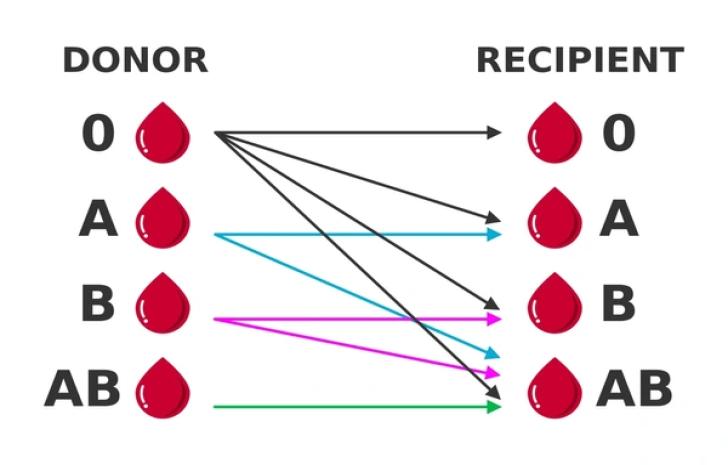
- If you have type A blood with A-antigens, you also make anti-B antibodies. So, you can’t get type B or AB blood, because your anti-B antibodies would attack any donor blood with B-antigens. You can only get type A or O blood.
- If you have type B blood with B-antigens, you also make anti-A antibodies. So, you can’t get type A or AB blood, because your anti-A antibodies would attack any donor blood with A antigens. You can only get type B or O blood.
- If you have type AB blood with A and B antigens, you don’t make anti-A or anti-B antibodies. That is why people with type AB blood can receive transfusions from any blood type. These people are sometimes called universal receivers.
- If you have type O blood with no A or B antigens, you make both anti-A and anti-B antibodies. So, people with type O blood can only get type O blood because their anti-A and anti-B antibodies would attack any donor blood with A or B antigens. But since type O has no antigens, anyone of any blood type can receive type O blood. This is why people with type O blood are sometimes called universal donors.